CoverEdge Blog
Practical guides on covered call strategies, the wheel strategy, strike selection, roll management, and options income tracking.
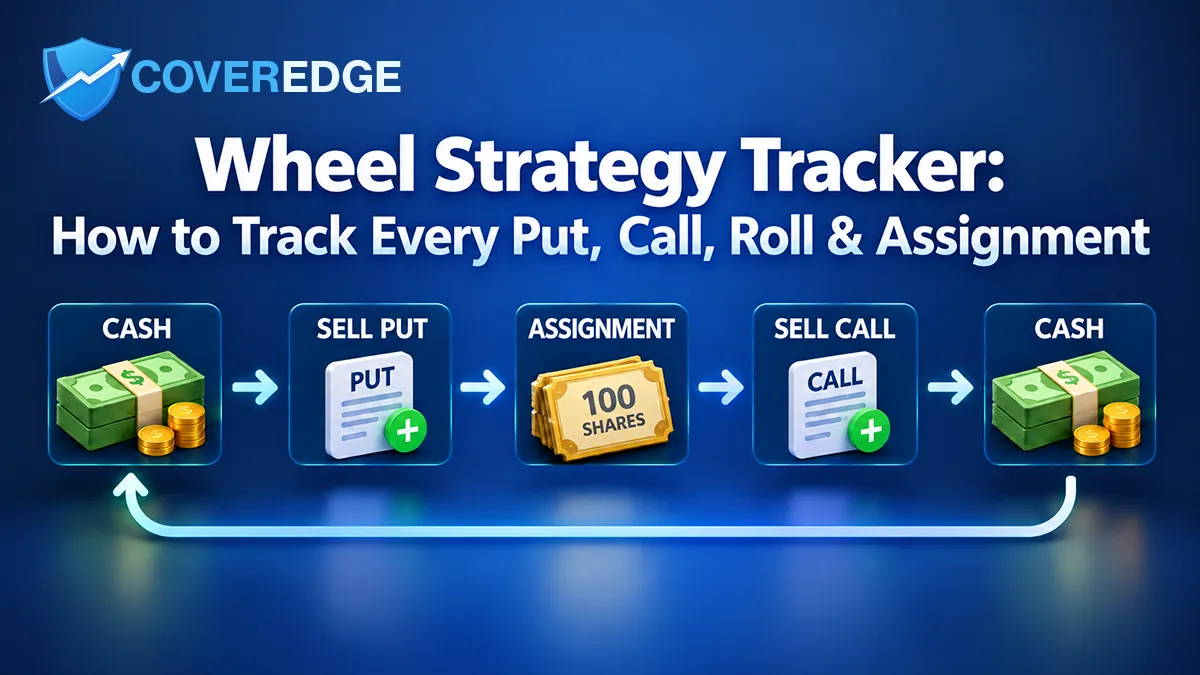
Wheel Strategy Tracker: How to Track Every Put, Call, Roll & Assignment
A wheel is one position that keeps changing form — cash, a short put, shares, a covered call, and back to cash. Here's how to track every leg so your cumulative P&L stays honest after rolls and assignments.
Read more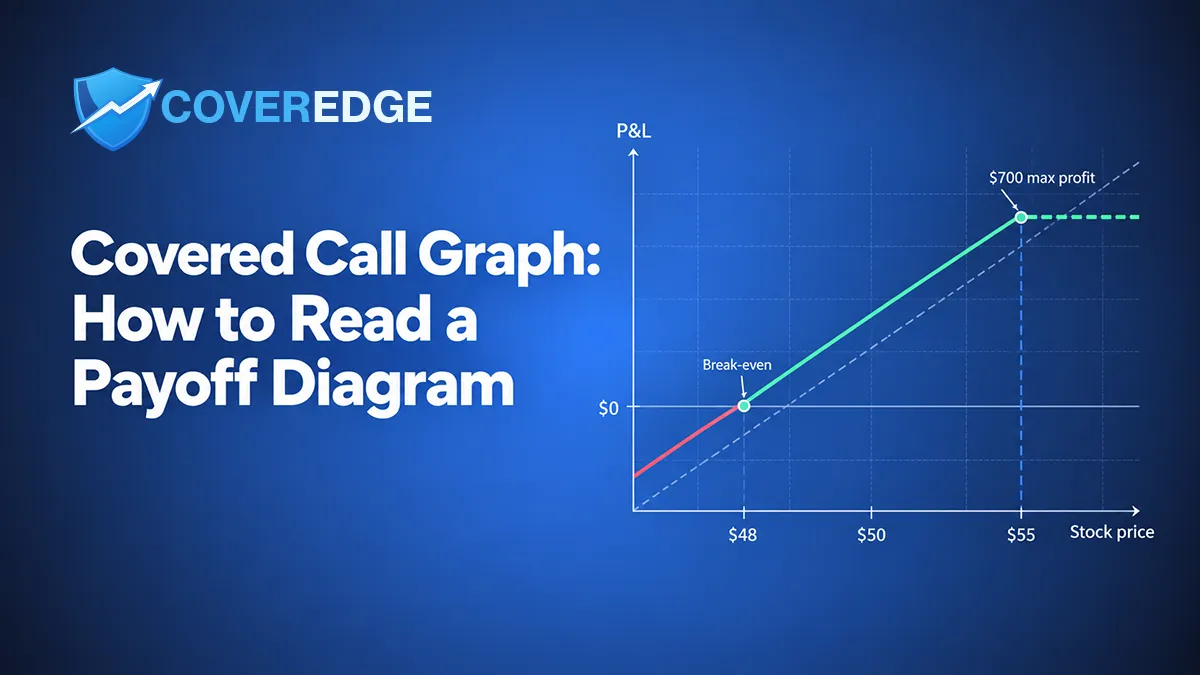
Covered Call Graph: How to Read a Payoff Diagram
A covered call graph plots your profit or loss at expiration against the stock price. It has one distinctive shape — a loss on the left, a climb through break-even, and a flat cap at the strike. Here's how to read all three numbers at a glance.
Read more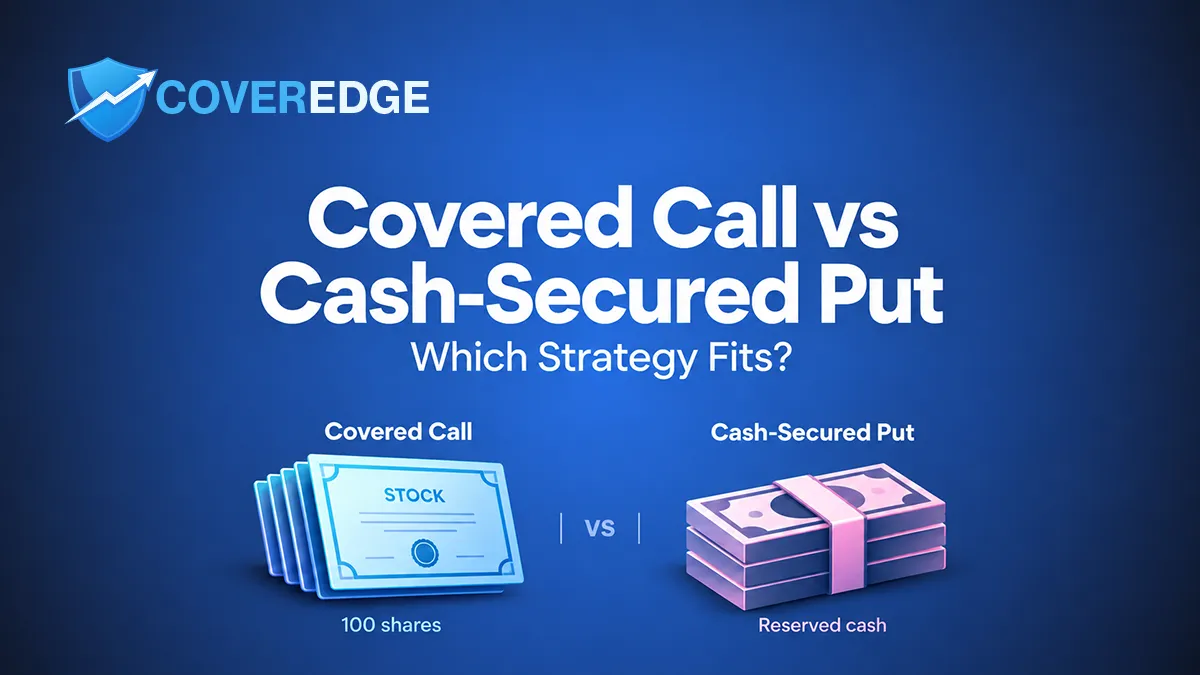
Covered Call vs Cash-Secured Put: Which Strategy Fits?
At the same stock, strike, and expiration, a covered call and a cash-secured put can produce nearly identical payoffs — the Options Industry Council even calls them comparable positions. So why choose one over the other? The answer is your starting point and your goal, not the headline premium.
Read more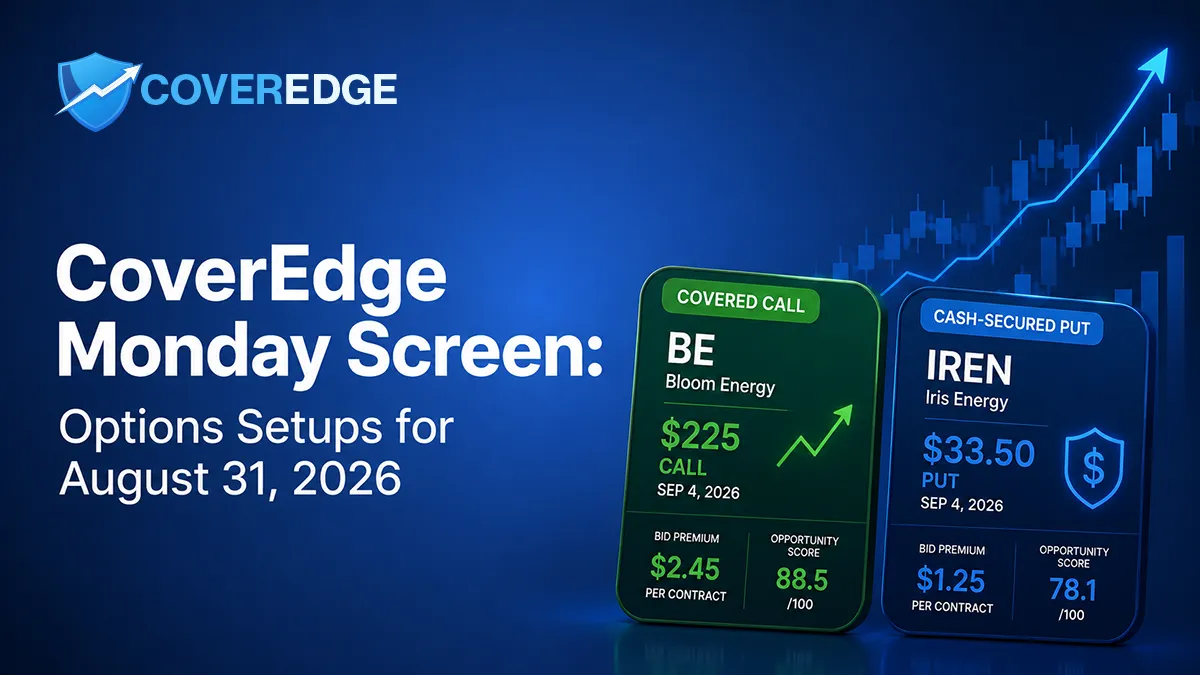
CoverEdge Monday Screen: Options Setups for August 31, 2026
The first CoverEdge Monday Screen: a fixed, public universe run through our 0–100 Opportunity Score, frozen at a single August 31 snapshot. One covered call (BE) and one cash-secured put (IREN), with the strike cushion, collateral, and assignment math shown next to every headline yield.
Read more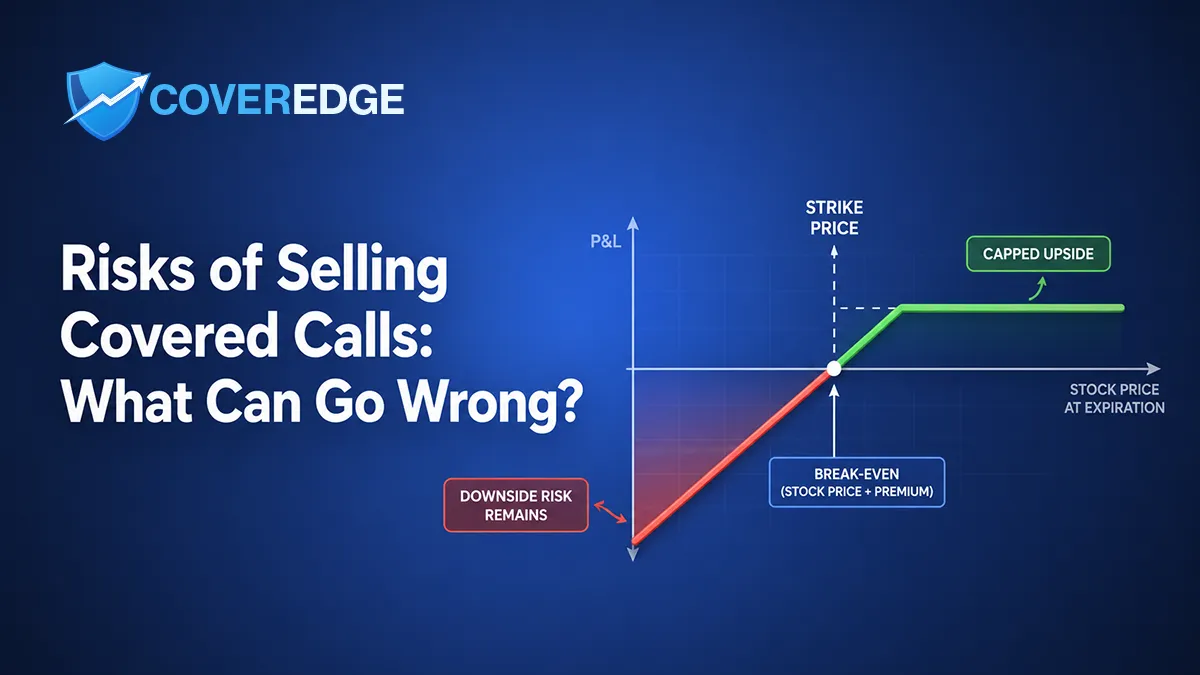
Risks of Selling Covered Calls: What Can Go Wrong?
A covered call collects premium in exchange for capping your upside — but you still own the shares, so the stock falling is the real risk. Here are the seven ways a covered call can go wrong, and how to keep each one in check.
Read more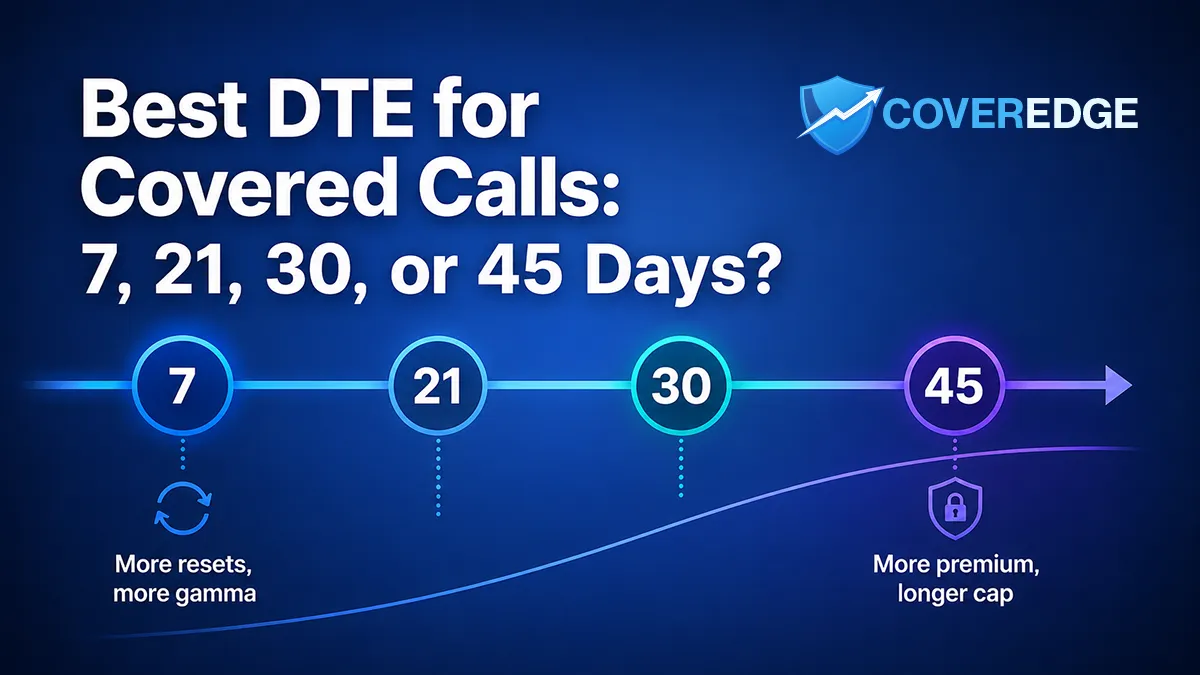
Best DTE for Covered Calls: 7, 21, 30, or 45 Days?
Should you sell weekly, three-week, or monthly covered calls? Compare 7, 21-30, and 30-45 DTE on premium, time decay, gamma risk, and management load - and see why the highest annualized return isn't automatically the best choice.
Read more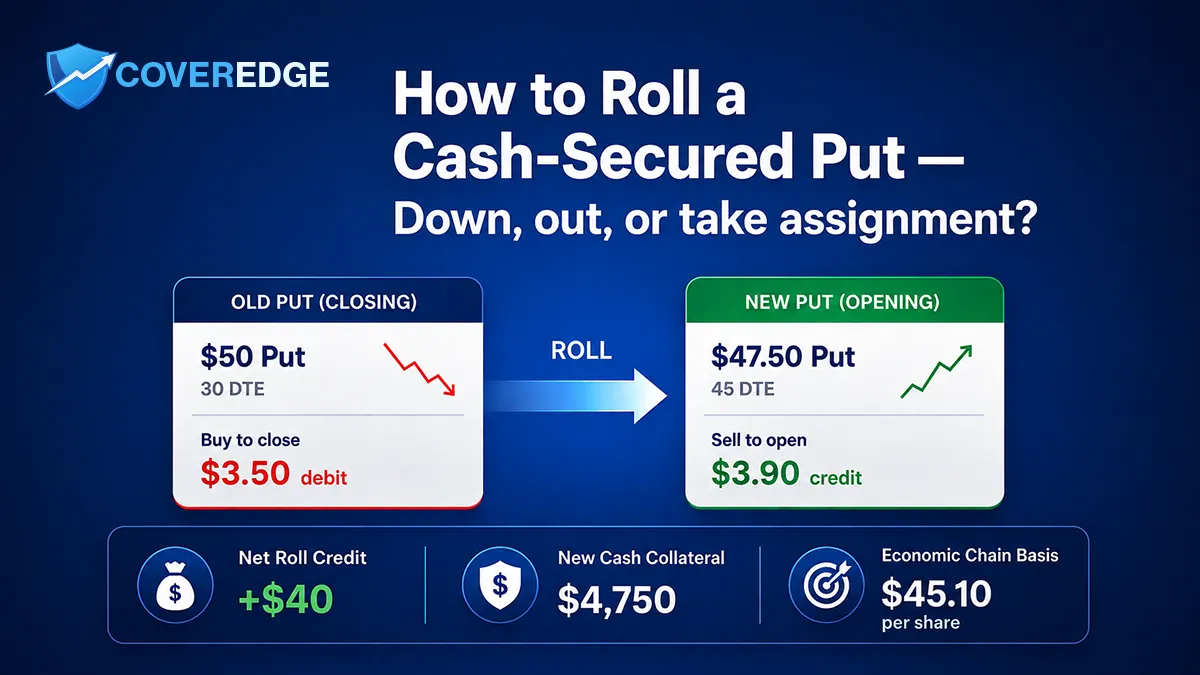
How to Roll a Cash-Secured Put: Down, Out, or Take Assignment?
A put roll can lower your strike or buy more time, but it never erases the old contract's loss. Learn the down, out, and down-and-out choices, the net-credit math, and when assignment or a clean close is better.
Read more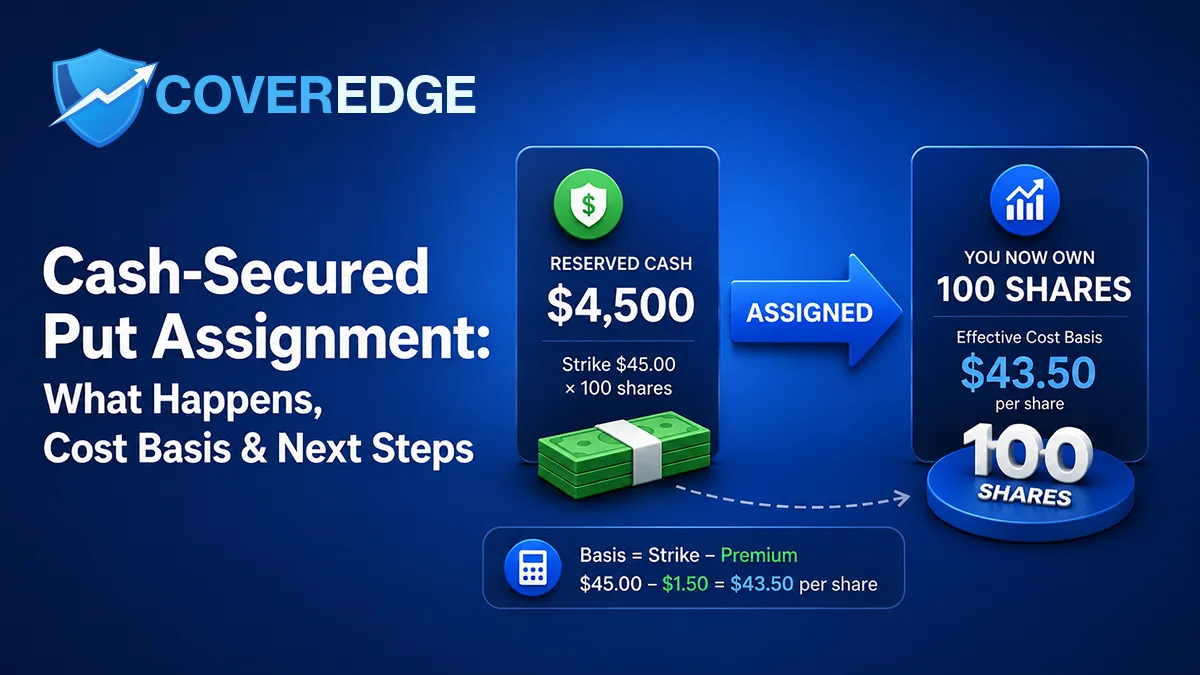
Cash-Secured Put Assignment: What Happens, Cost Basis & Next Steps
Assignment on a cash-secured put isn't a failure — it's the outcome you agreed to. Your reserved cash buys the shares at the strike, you keep the premium, and your real entry is strike minus premium. Here's what happens and what to do next.
Read more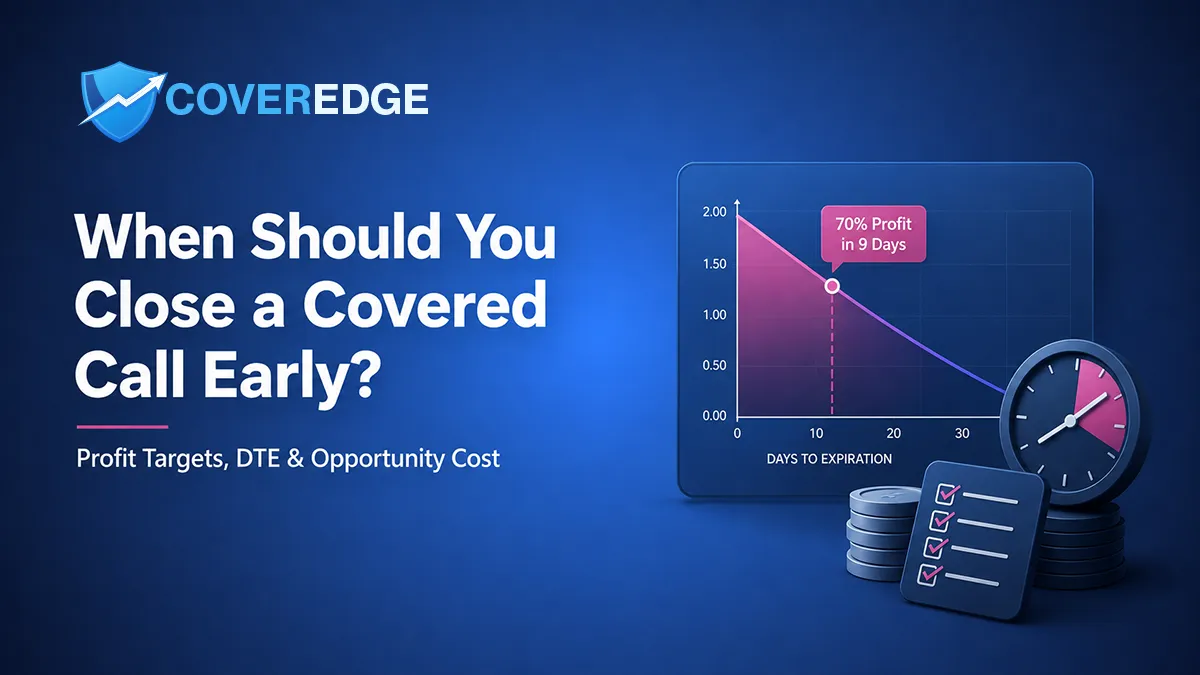
When Should You Close a Covered Call Early? Profit Targets, DTE & Opportunity Cost
You don't have to hold a covered call to expiration. Buying it back early can be smart when most of the premium is already earned — but the 50% rule is a checkpoint, not a law. Here's how to weigh what's left to earn against the risk you'd keep.
Read more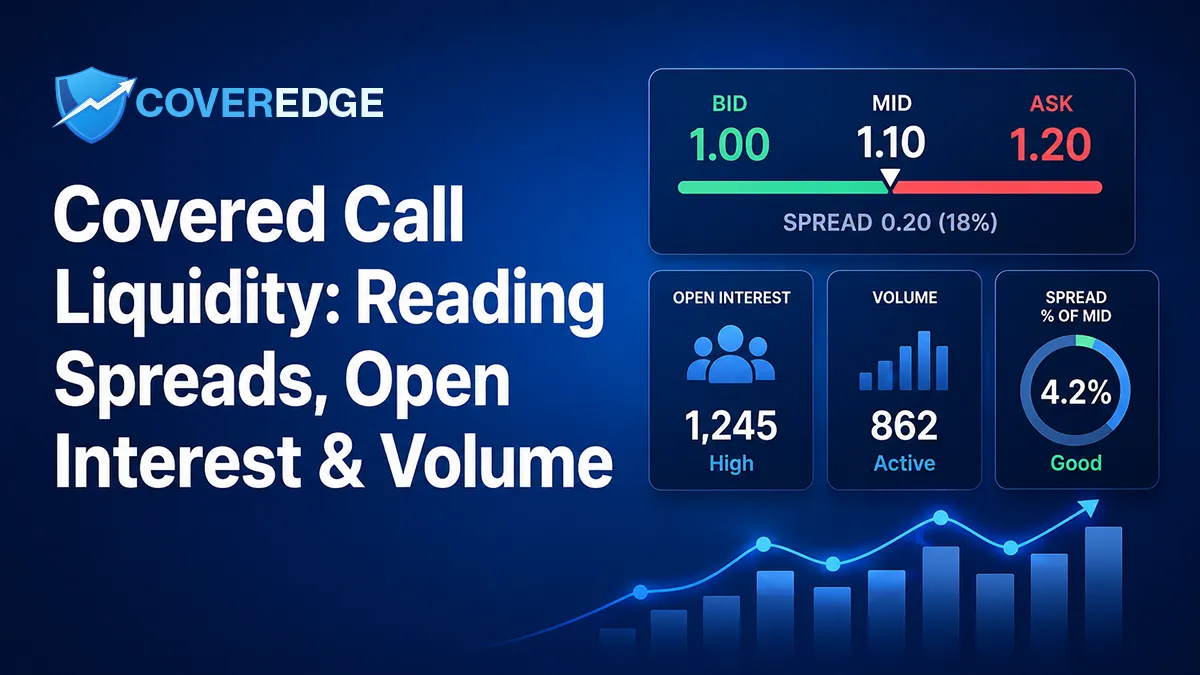
Covered Call Liquidity: Reading Spreads, Open Interest & Volume
The premium a screener shows you isn't always the premium you can collect. The gap is liquidity. Here's how to read the bid-ask spread, open interest, and volume so you stop handing premium back to the market on every trade.
Read more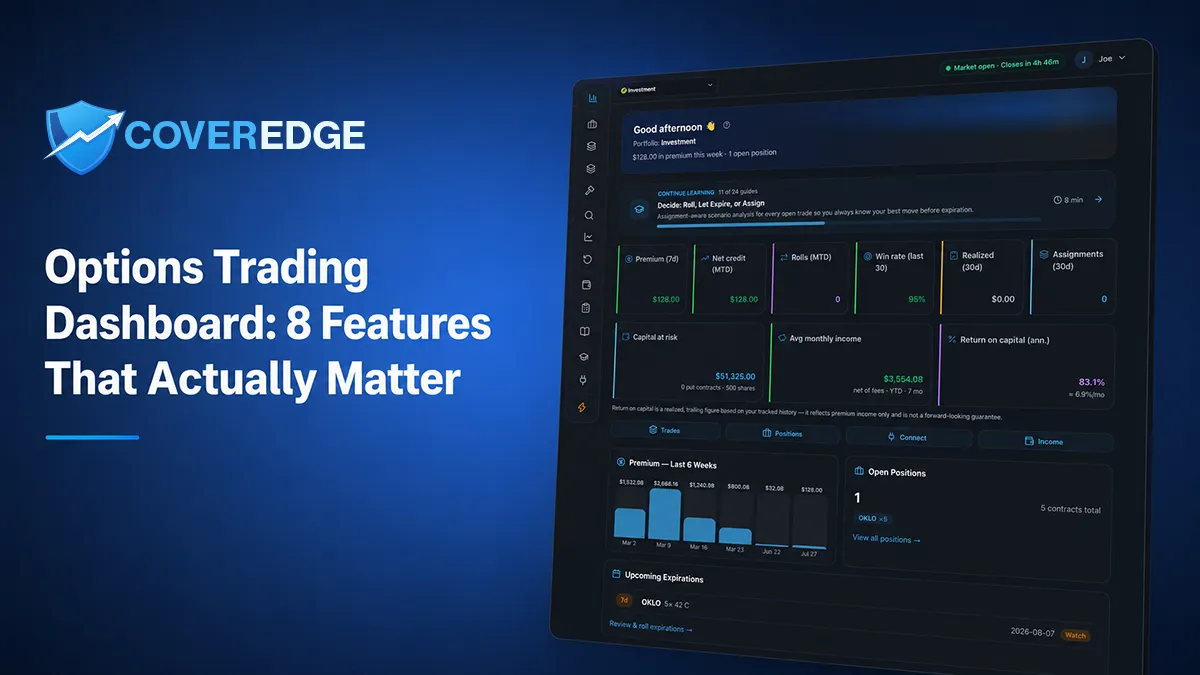
Options Trading Dashboard: 8 Features That Actually Matter
A good options dashboard isn't the one with the most widgets. It's the one that surfaces what needs a decision today, preserves what actually happened, and makes every number traceable. Here are the eight features that matter — and the flashy ones that don't.
Read more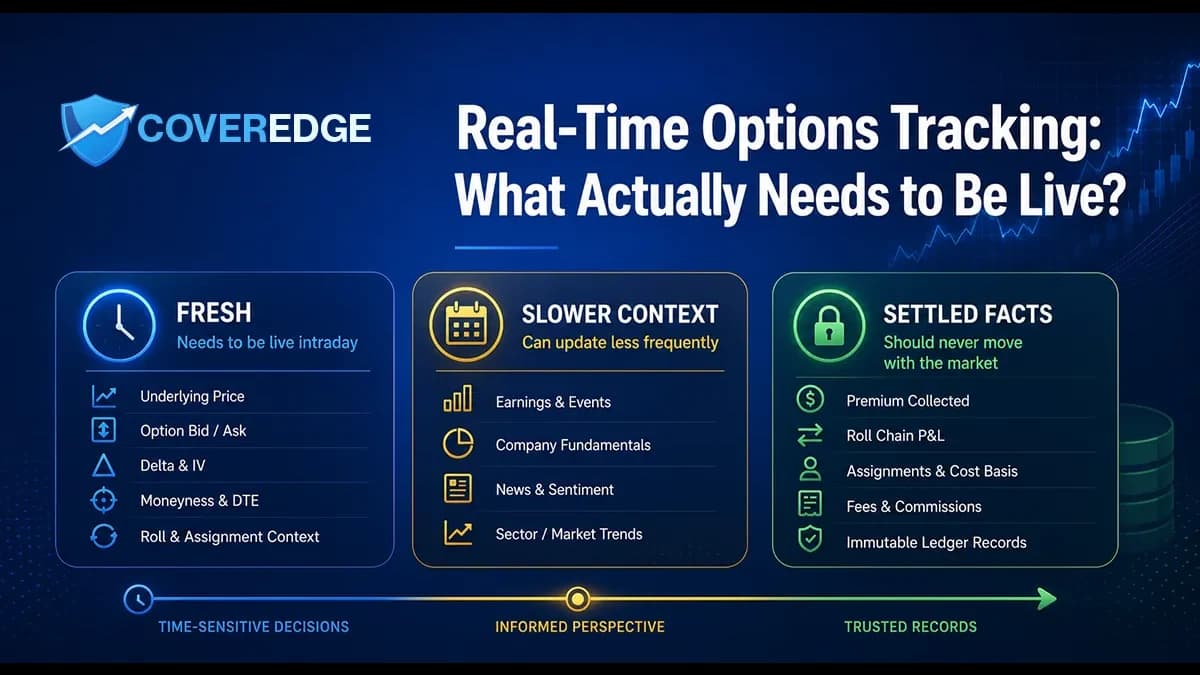
Real-Time Options Tracking: What Actually Needs to Be Live?
"Is it real-time?" is the wrong first question for an options tracker. For covered calls and cash-secured puts, almost nothing needs to stream tick-by-tick — you need the right data fresh, and your trade history to stay a settled fact.
Read more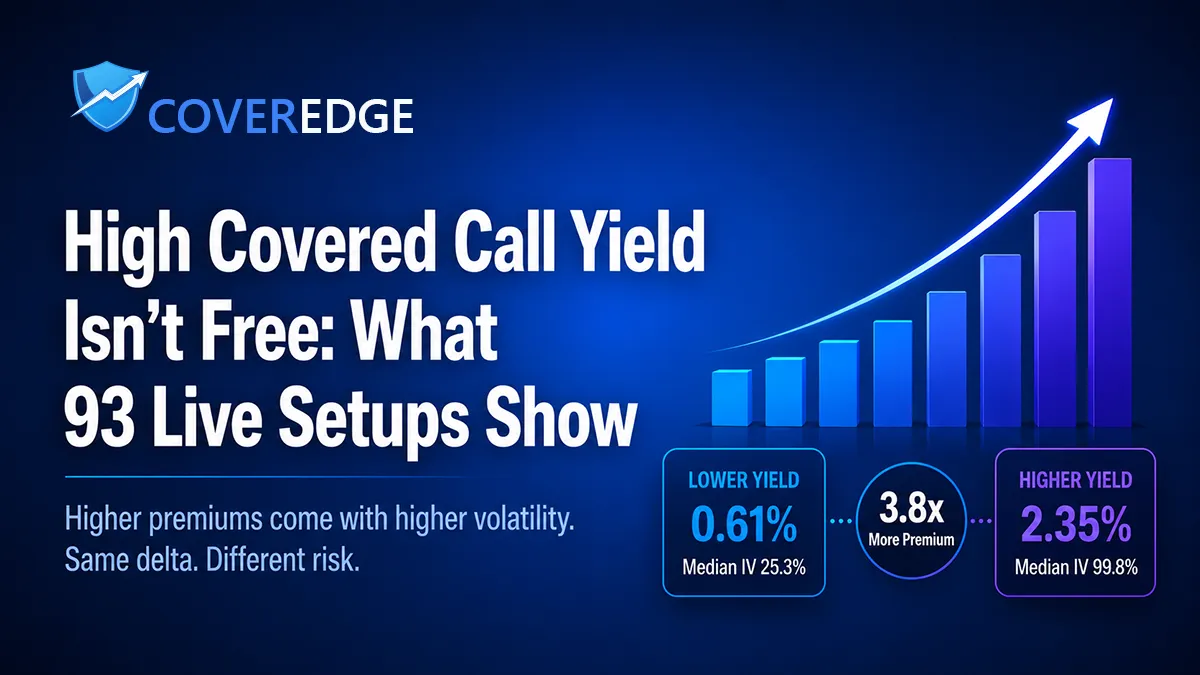
High Covered Call Yield Isn't Free: What 93 Live Setups Show
The fattest premium feels like the best trade. We held delta and DTE constant across 93 live covered call setups and let only the stock vary — the top-yield quartile paid 3.8× the premium on ~4× the implied volatility. Yield is a risk price, not an edge.
Read more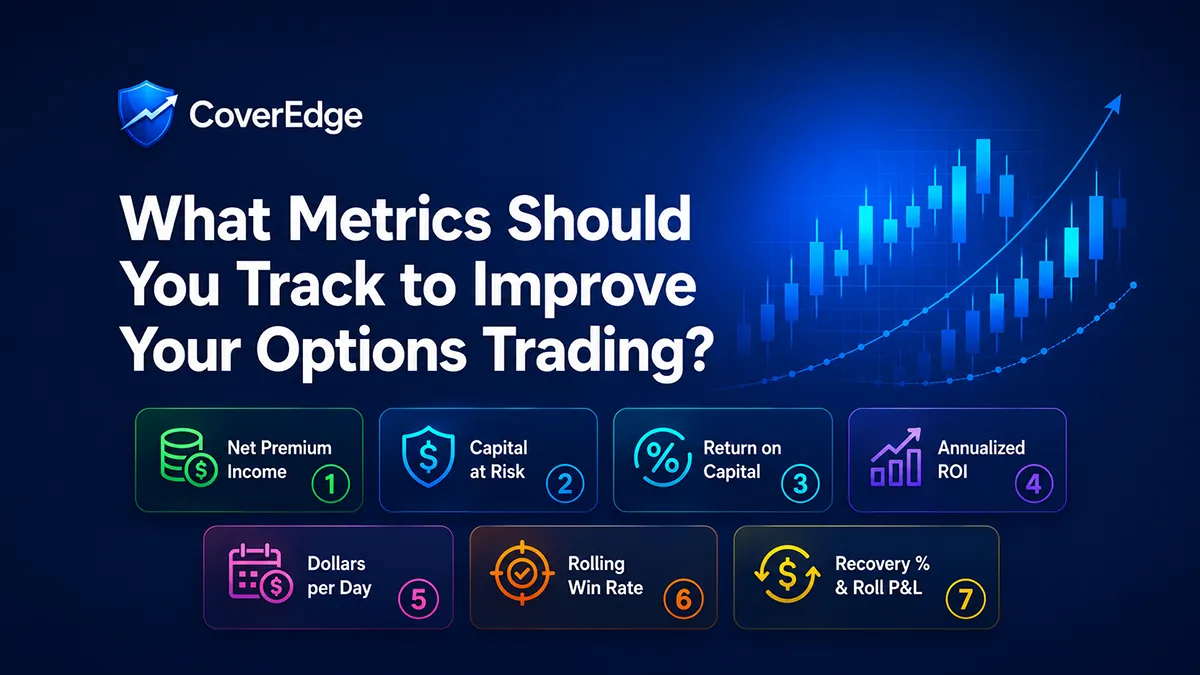
What Metrics Should You Track to Improve Your Options Trading?
You can win 80% of your trades and still lose money. Here are the seven options trading metrics that actually measure performance — net income, capital at risk, return on capital, and the win-rate context most sellers miss.
Read more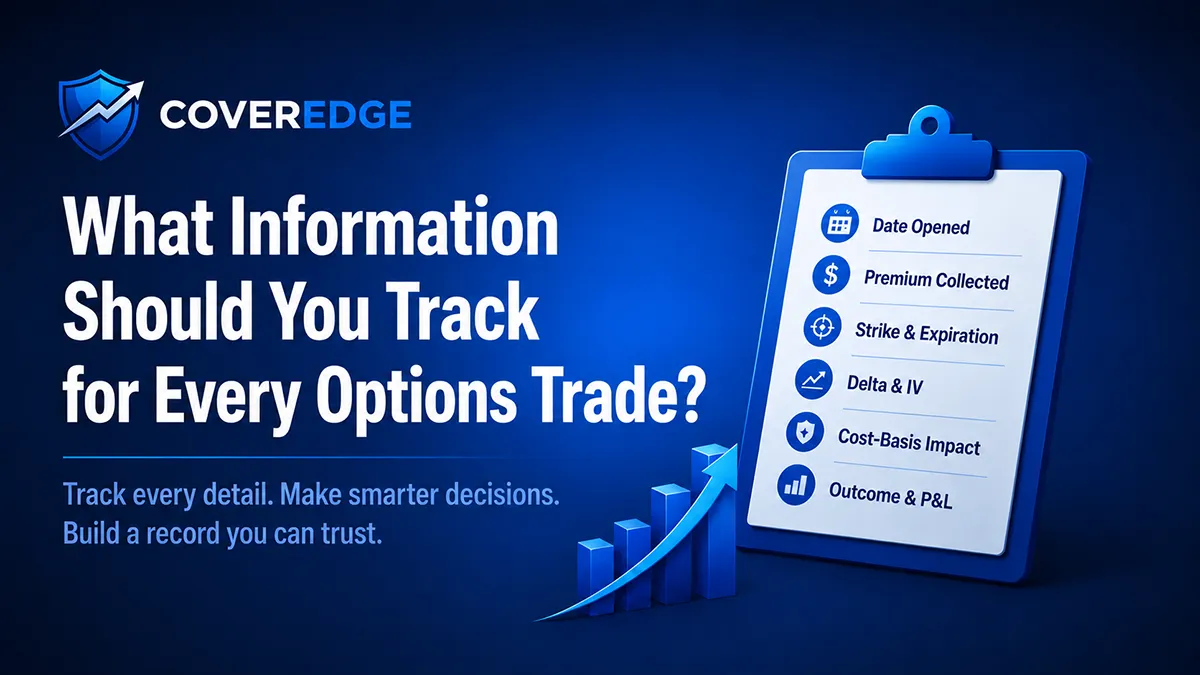
What Information Should You Track for Every Options Trade?
The strike and premium are the easy part — it's the cost-basis impact, the buy-to-close debit, and your original thesis that people skip. Here's the full checklist of what to record on every options trade.
Read more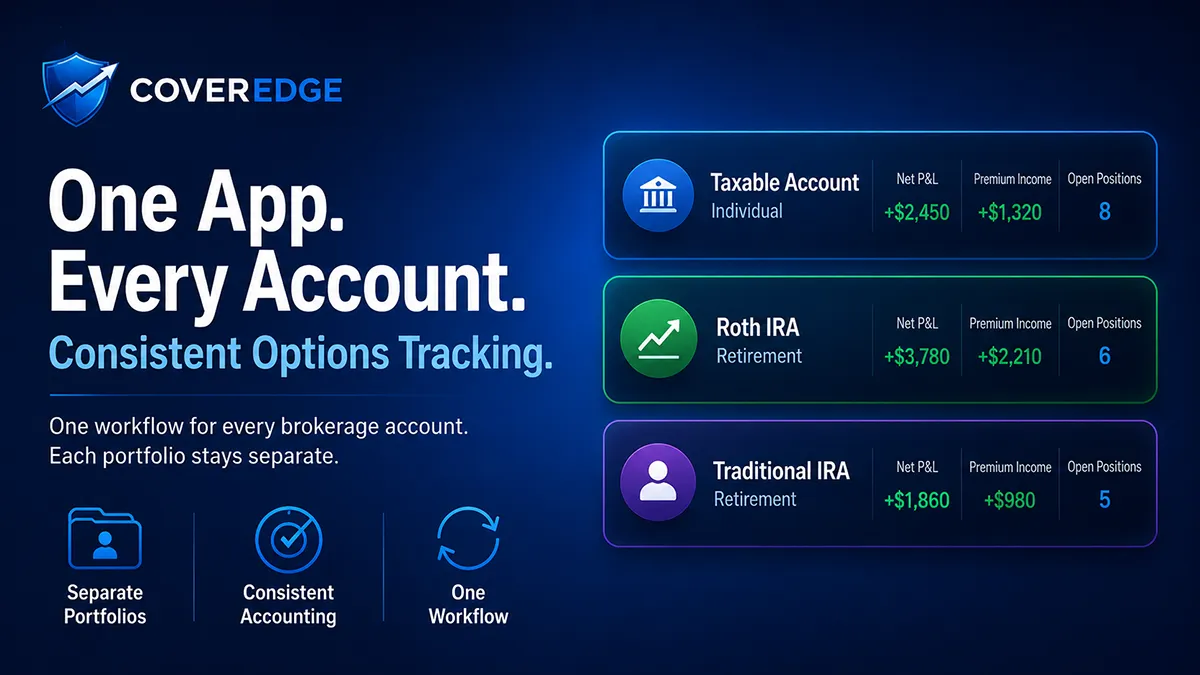
How to Track Options Across Multiple Brokerage Accounts (Without Losing the Thread)
A Roth here, a taxable account there, a small account somewhere else — and three broker apps that each count P&L differently. Here's how to track options across multiple brokerage accounts with one consistent, tax-accurate system.
Read more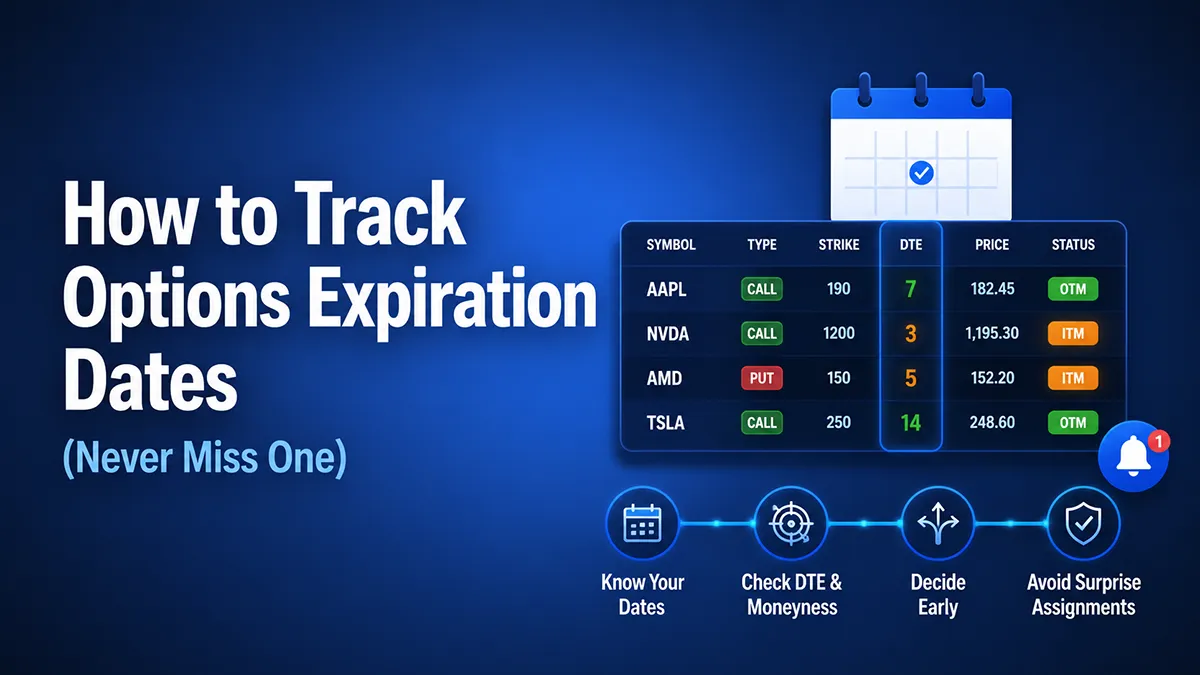
How to Track Options Expiration Dates (Never Miss One)
A forgotten expiration is how income sellers get surprised — shares called away, a stock put to you overnight. Here's how to track options expiration dates so every position gets a decision before it ages out.
Read more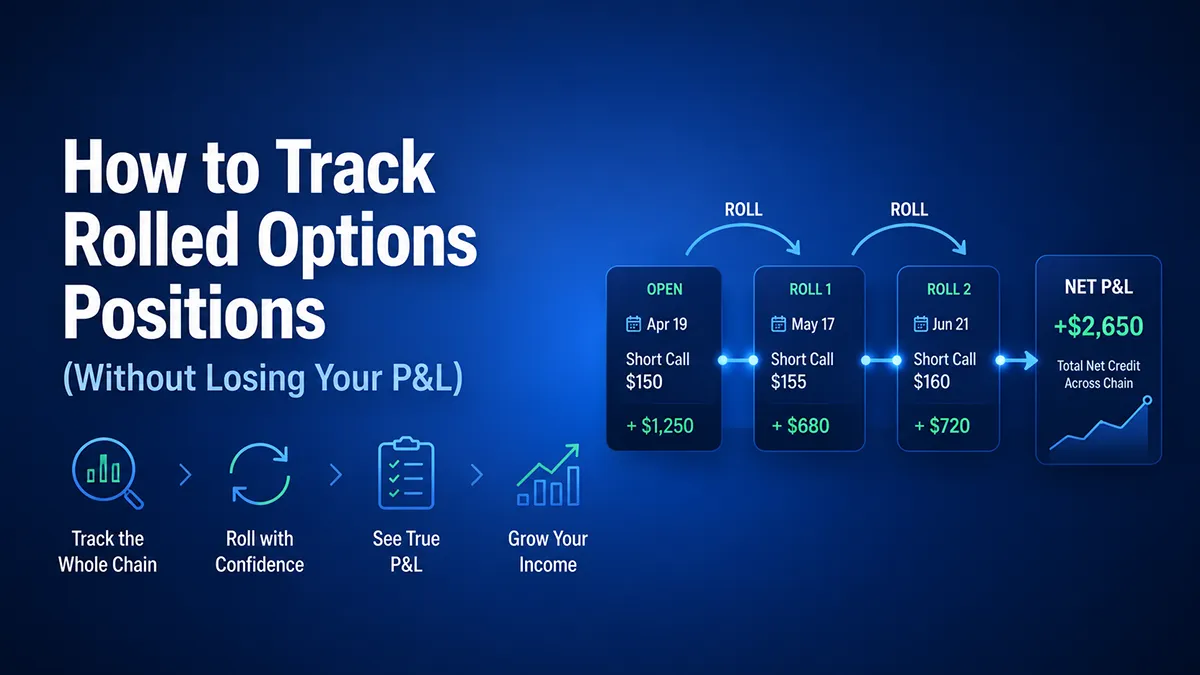
How to Track Rolled Options Positions (Without Losing Your P&L)
Rolling keeps an income position alive — but it scatters one position across a dozen transactions. Here's how to track rolled options as a single roll chain so your P&L still adds up after the tenth roll.
Read more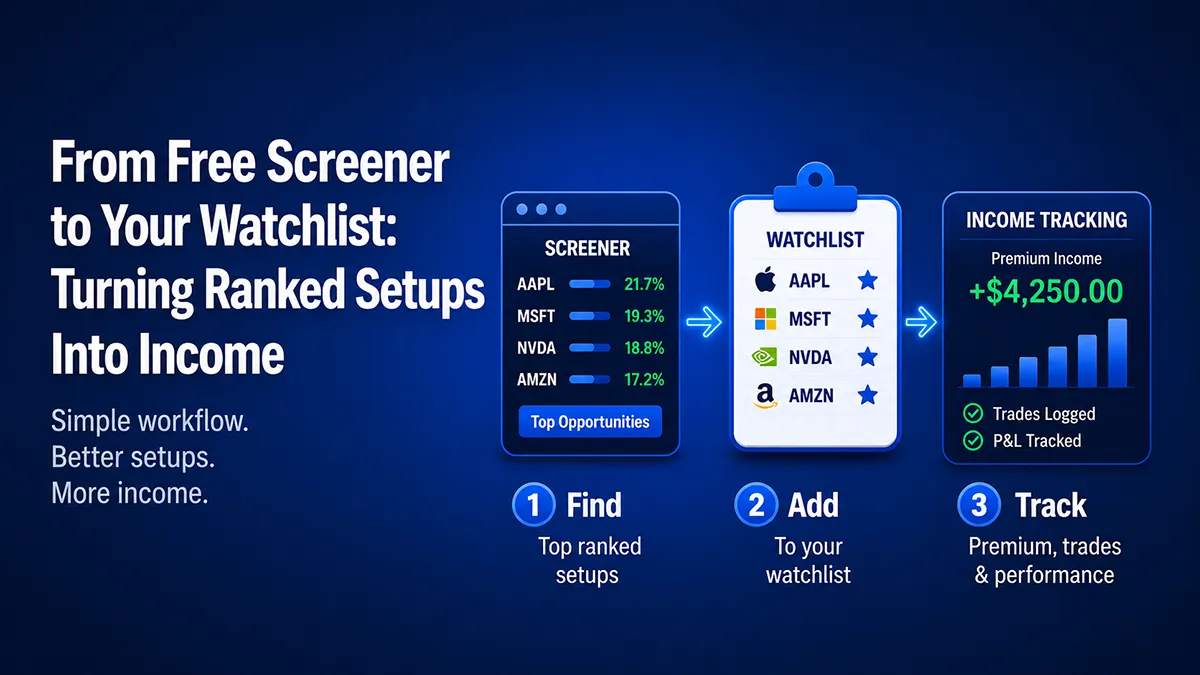
From Free Screener to Your Watchlist: Turning Ranked Setups Into Income
A ranked list is only useful if it ends in a trade you track. Here's the full workflow — from the free screener to the in-app Opportunity Screener to your watchlist and ledger.
Read more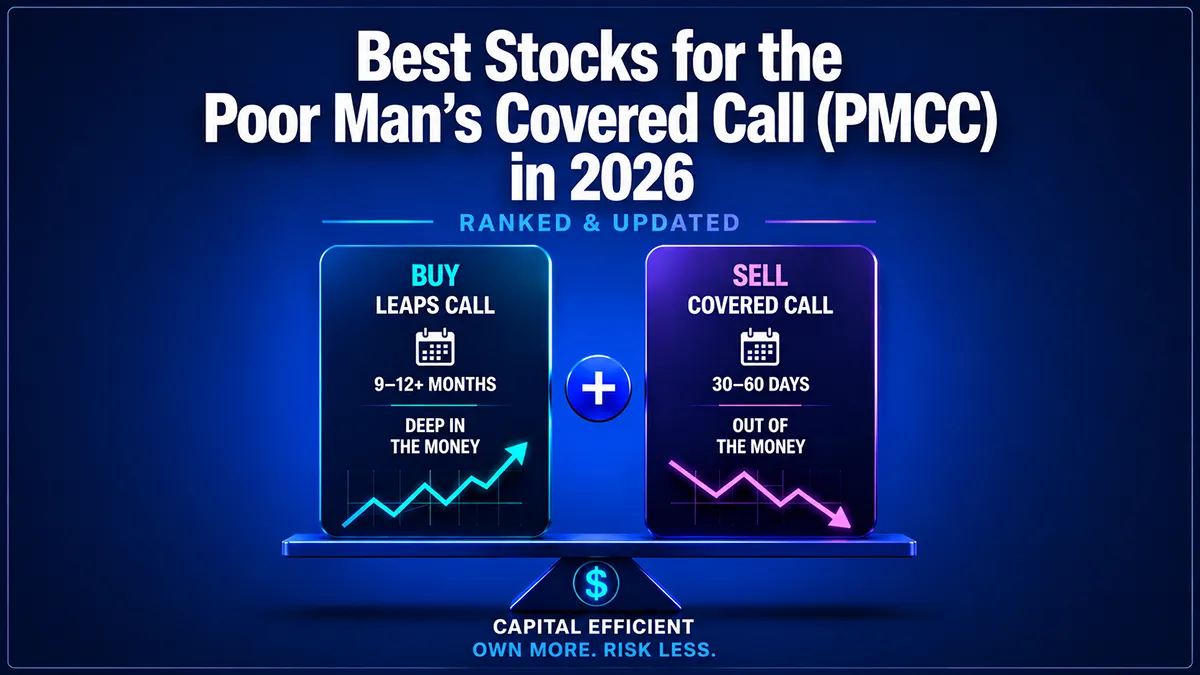
Best Stocks for the Poor Man's Covered Call (PMCC) in 2026 (Ranked & Updated)
The PMCC replaces 100 shares with a deep-ITM LEAPS, so the ideal ticker needs liquid long-dated options and a steady uptrend. Here are the best stocks for the poor man's covered call in 2026.
Read more
Best Stocks for the Wheel Strategy in 2026 (Ranked & Updated)
The wheel sells puts, takes assignment, then sells covered calls — so the ideal ticker has to work on both sides. Here are the best stocks for the wheel strategy in 2026 and what to screen for.
Read more
Best High-IV Stocks for Covered Calls in 2026 (Ranked & Updated)
High implied volatility means the richest covered call premiums — and the widest swings. Here are the best high-IV stocks for covered calls in 2026 and how to size the risk so the yield is worth it.
Read more
Best Stocks Under $50 for Cash-Secured Puts in 2026 (Ranked & Updated)
Cash-secured puts tie up the strike times 100 in collateral — so lower-priced stocks let small accounts run the strategy and stay diversified. Here are the best stocks under $50 for cash-secured puts in 2026.
Read more
Best Stocks for Weekly Covered Calls in 2026 (Ranked & Updated)
Weekly options let you compound premium 4–5 times a month. Here are the best stocks for weekly covered calls in 2026 — the deepest weekly chains — and how to manage the extra gamma risk.
Read more
Best Dividend Stocks for Covered Calls in 2026 (Ranked & Updated)
Dividend payers let you stack two income streams on the same shares — the dividend plus the premium. Here are the best dividend stocks for covered calls in 2026, plus the ex-dividend assignment trap to avoid.
Read more
Best Stocks for Cash-Secured Puts in 2026 (Ranked & Updated)
Not every stock is a good cash-secured put candidate. Here are the five characteristics to screen for — liquidity, IV, price, and support — plus ranked ticker examples (including small-account picks) that fit in 2026.
Read more
Should You Sell Covered Calls Through Earnings?
Selling covered calls through earnings is one of the most divisive questions in income options. Here's a clear framework — close, wait, or sell wide — with the math.
Read more
IV Rank vs IV Percentile: A Premium Seller's Guide
IV rank and IV percentile both tell you whether vol is rich — but they answer different questions. Here's how serious premium sellers use them to time entries.
Read more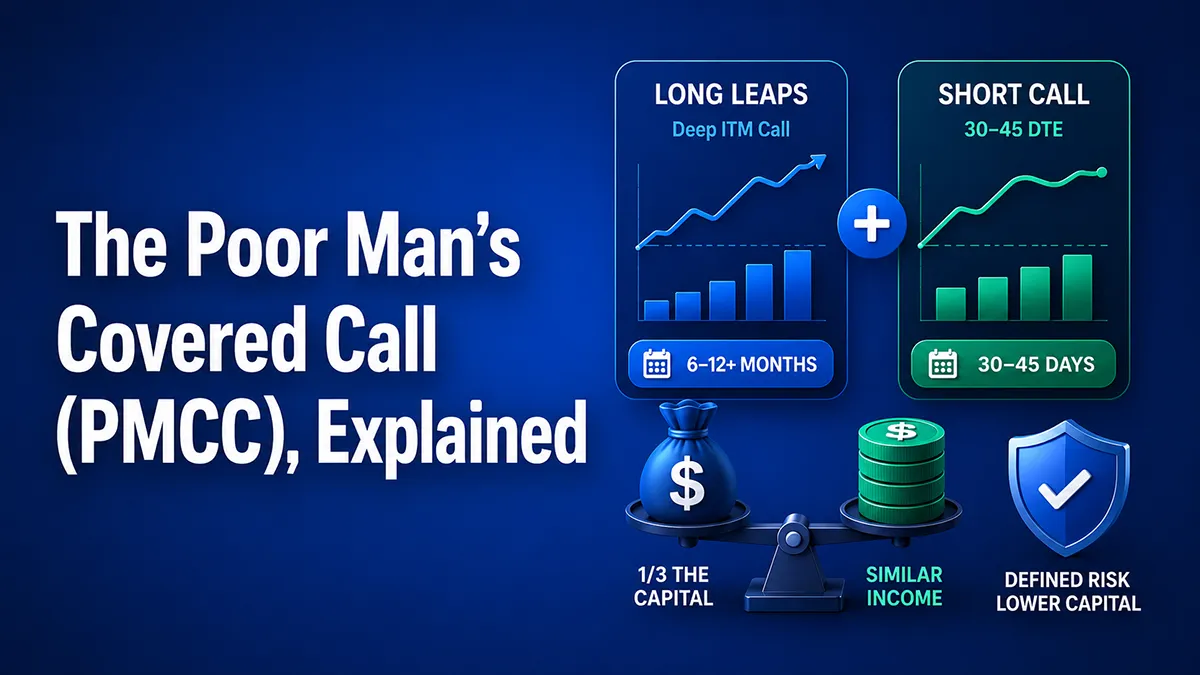
The Poor Man's Covered Call (PMCC), Explained
Want covered-call income but can't tie up $40k in shares? The poor man's covered call uses a deep-ITM LEAPS as a stock substitute. Here's how to run it correctly.
Read more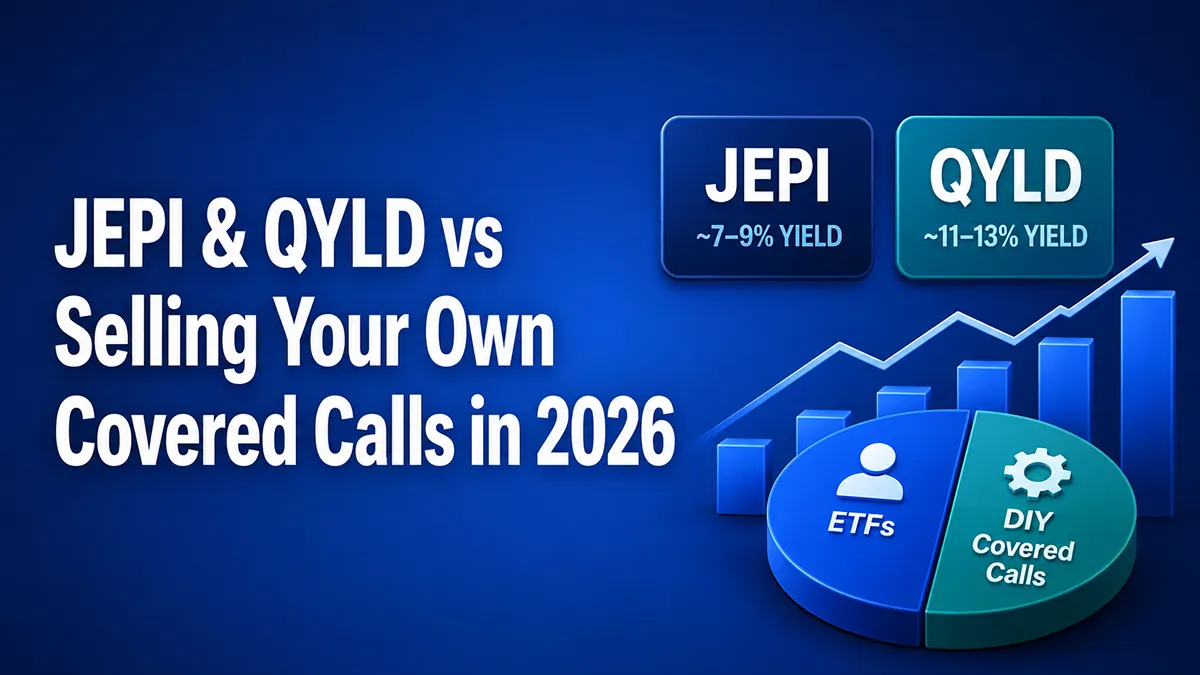
JEPI & QYLD vs Selling Your Own Covered Calls in 2026
JEPI and QYLD promise passive premium income — but the headline yield hides a lot. Here's the honest after-tax, after-effort comparison vs writing your own calls.
Read more
Covered Call Taxes Explained: Wash Sales, Holding Periods & 1099-B
Premium taxation, wash sale rules, and the holding-period trap that can convert long-term gains into short-term ones. The covered call tax guide every premium seller needs.
Read moreCash-Secured Puts: The Complete 2026 Guide
Cash-secured puts are the other half of the wheel — and a powerful standalone income strategy. Learn the mechanics, the math, and how to size them safely.
Read more
7 Mistakes New Covered Call Writers Make (And How to Avoid Them)
Every new covered call writer makes some of these mistakes. From selling through earnings to ignoring delta, here are 7 traps to avoid and how CoverEdge helps you stay disciplined.
Read more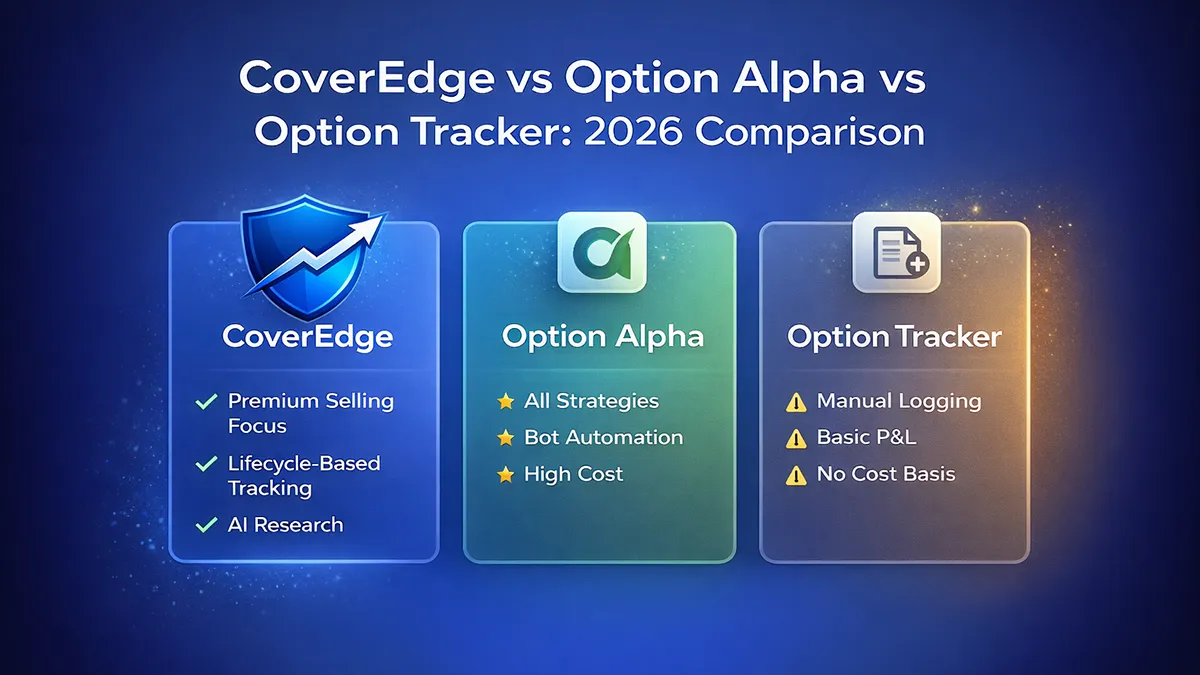
CoverEdge vs Option Alpha vs Option Tracker: 2026 Comparison
How does CoverEdge stack up against Option Alpha, spreadsheets, and other trackers? This head-to-head comparison covers features, pricing, and who each tool is best for.
Read more
How to Calculate Covered Call Returns: Yield, Breakeven & Max Profit
Before writing a covered call, you should know your annualized yield, breakeven, and max profit. Here are the formulas for each — worked through with real examples.
Read more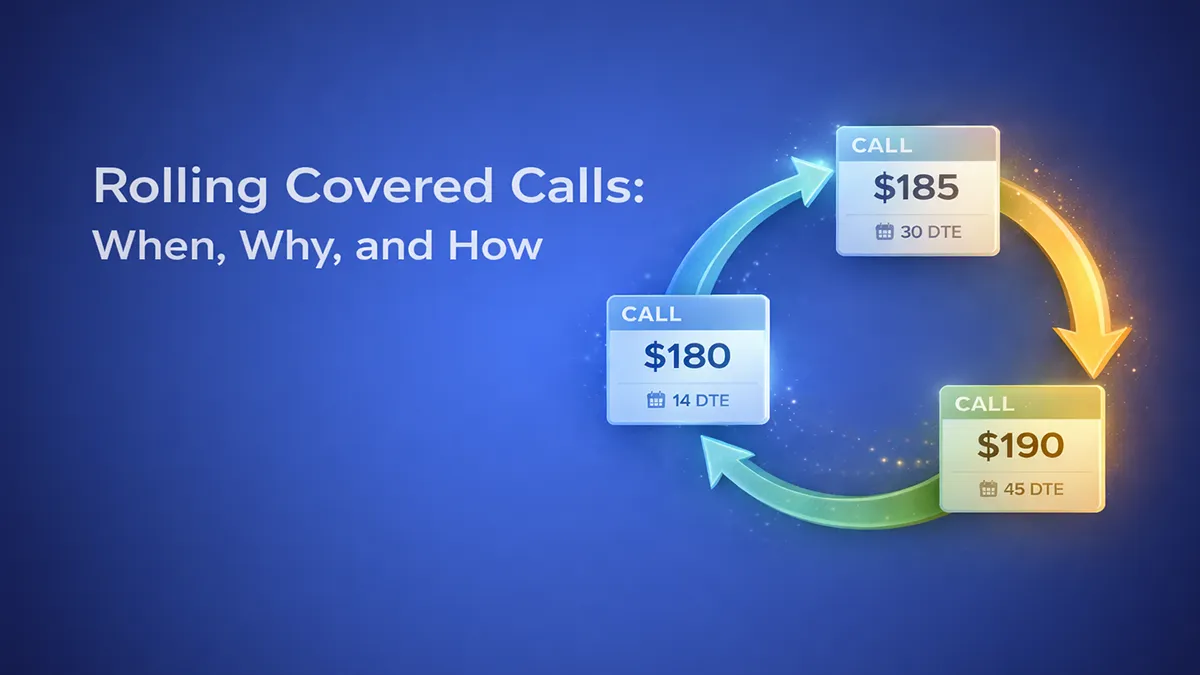
Rolling Covered Calls: When, Why, and How
Rolling is the most powerful tool in a covered call seller's toolkit — and the most misunderstood. This guide covers when to roll, when not to, and how to track it.
Read more
How to Track Options Premium Income Like a Pro
Tracking premium income accurately gets harder as your portfolio grows. Here's how professional premium sellers keep their P&L audit-grade clean.
Read more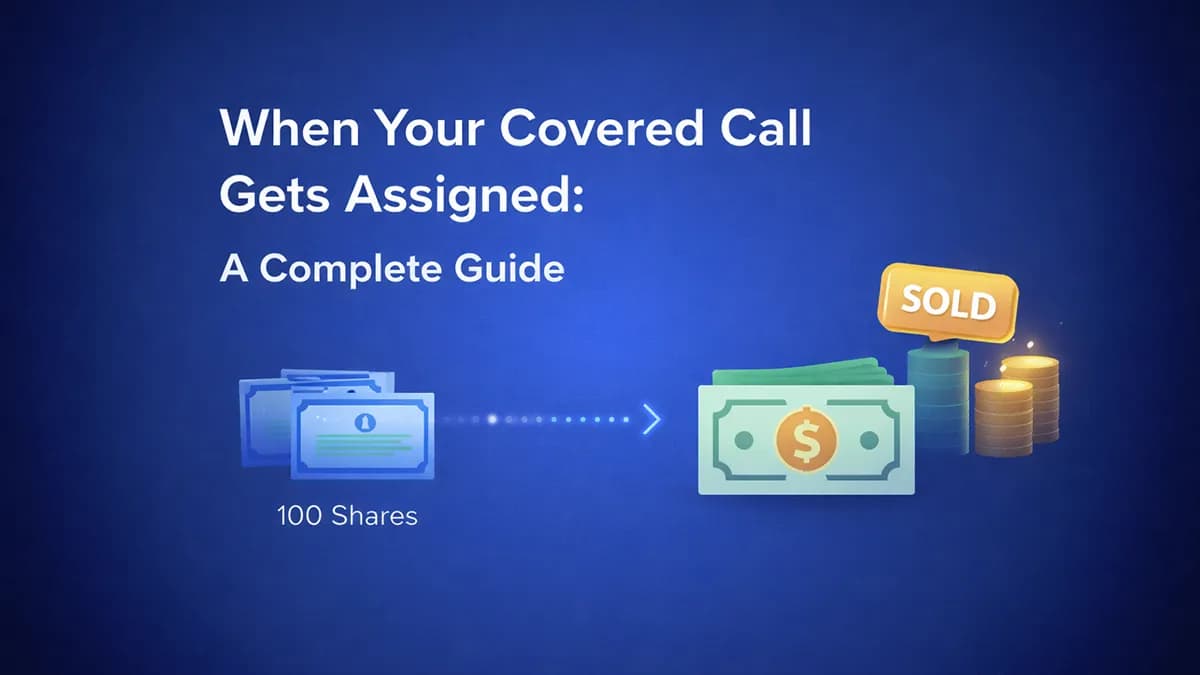
When Your Covered Call Gets Assigned: A Complete Guide
Assignment is a normal part of selling covered calls. This guide explains exactly what happens, how your P&L is affected, and when assignment is actually the best outcome.
Read more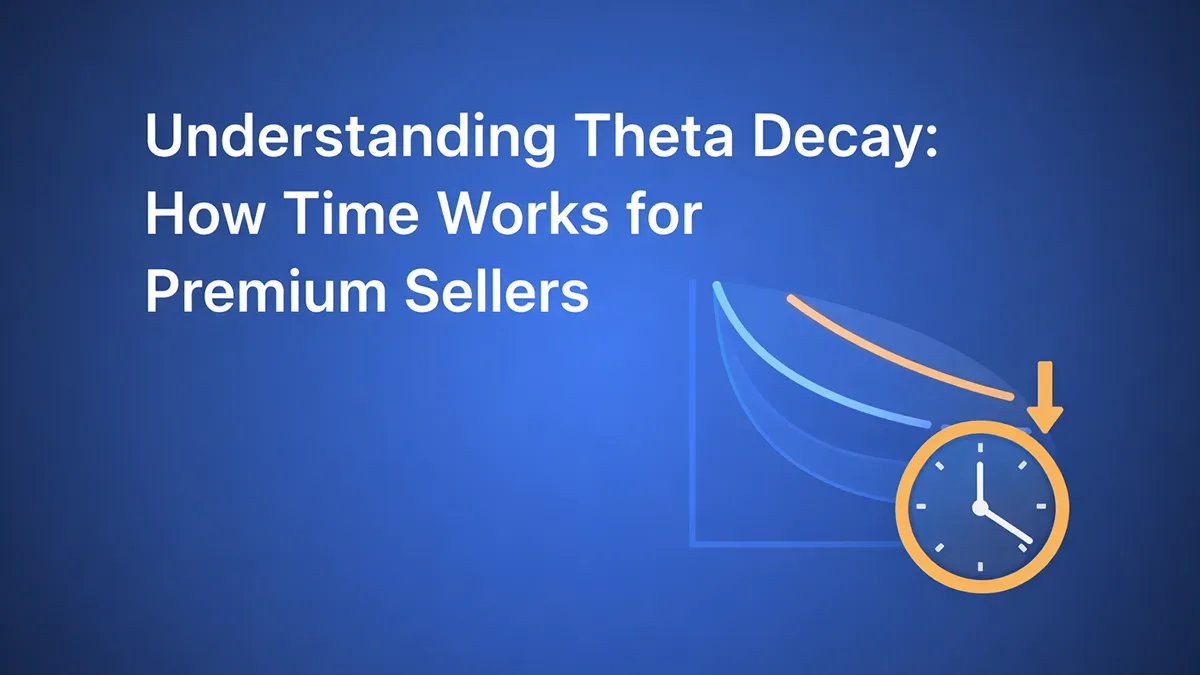
Understanding Theta Decay: How Time Works for Premium Sellers
Every day that passes, an option's time value erodes. For covered call and put sellers, that erosion is income. Here's how theta decay works in your favor.
Read more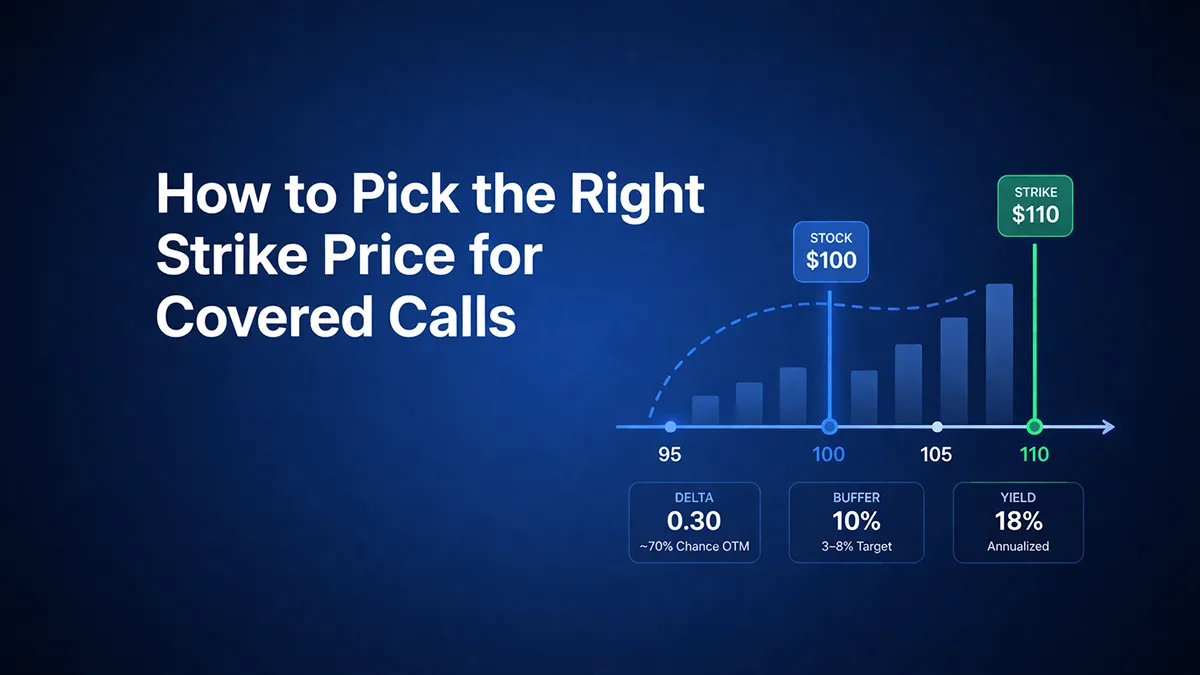
How to Pick the Right Strike Price for Covered Calls
Delta, buffer, and premium yield all matter when choosing a strike. This guide gives you a repeatable framework for picking the right strike every time.
Read more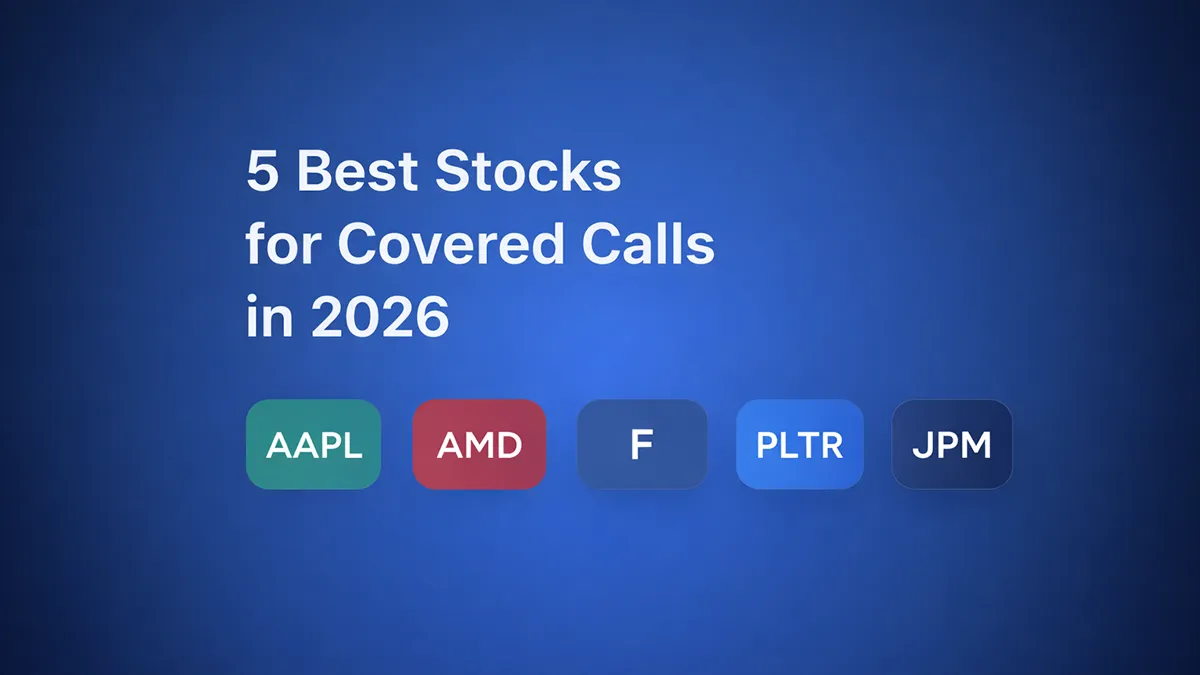
Best Stocks for Covered Calls in 2026: 5 Screened Picks
Not every stock makes a good covered call candidate. Here are the tickers — by dividend, weekly options, and high IV — with the liquidity and stability premium sellers look for in 2026.
Read more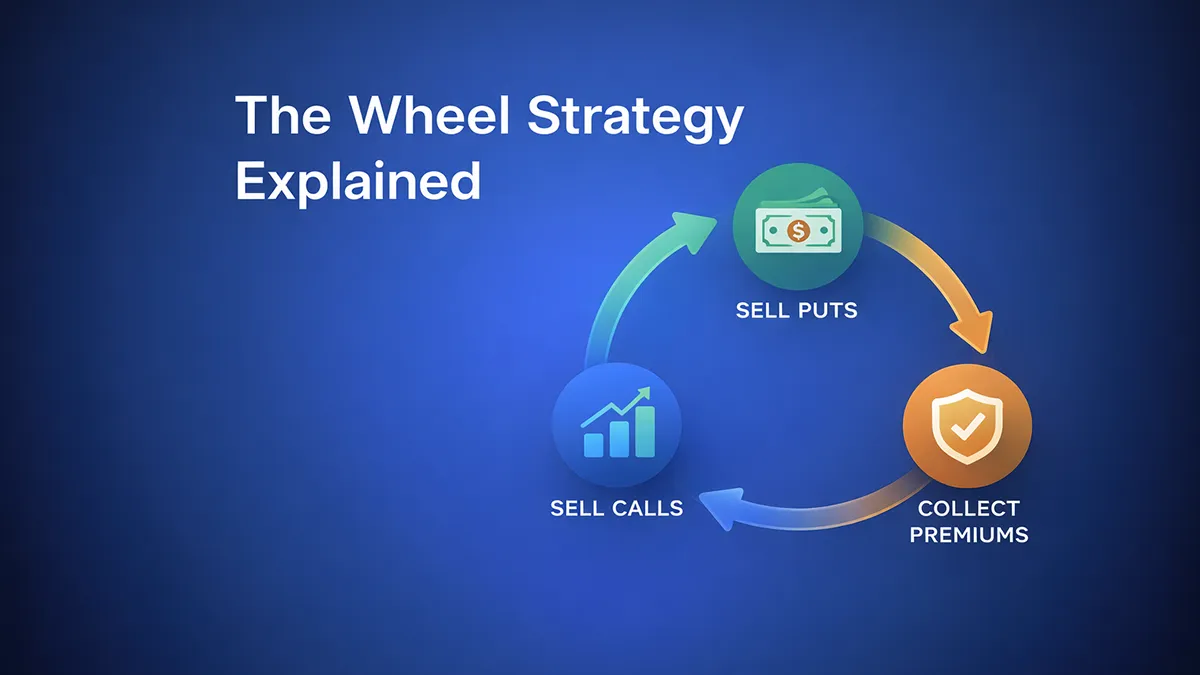
The Wheel Strategy Explained: A Step-by-Step Walkthrough
The wheel strategy is a systematic approach to selling cash-secured puts, getting assigned, then selling covered calls. This walkthrough covers every step.
Read more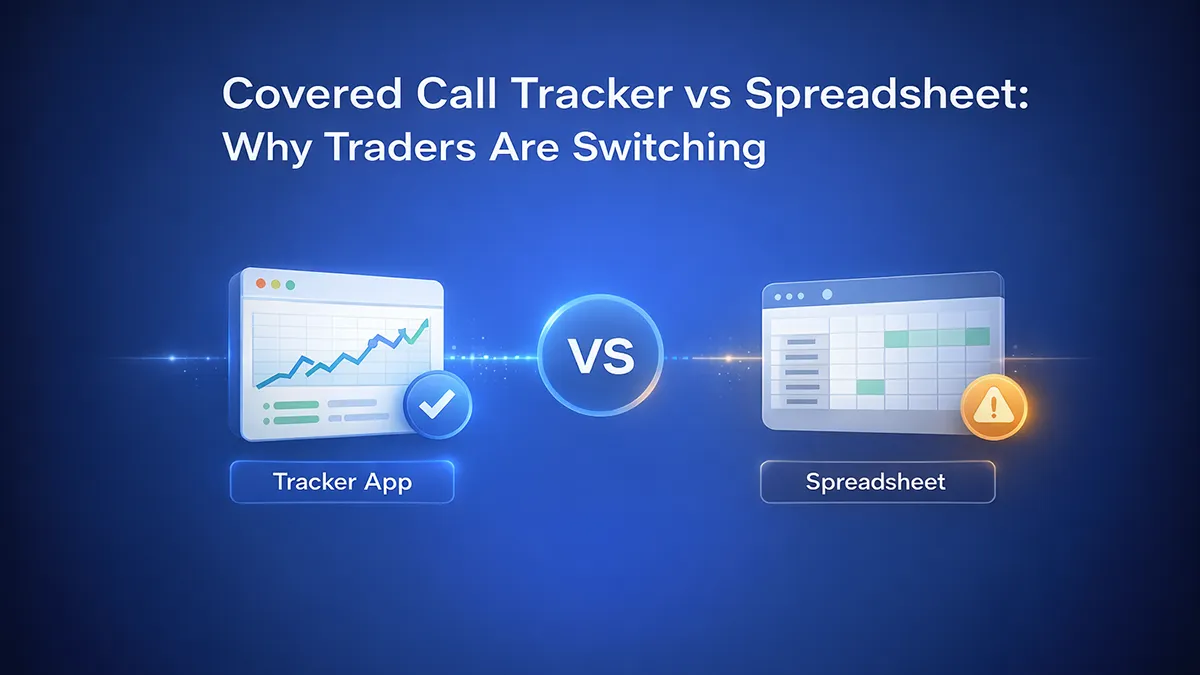
Covered Call Tracker vs Spreadsheet: Why Traders Are Switching
Spreadsheets work for your first few trades. But after 10 rolls, 3 assignments, and a dozen expirations, the math breaks. Here's why traders switch to a purpose-built tracker.
Read more
What Is a Covered Call? The Complete 2026 Guide
A covered call is one of the most popular income strategies in options trading. This guide explains how it works, when to use it, and what beginners need to know.
Read moreReady to track your covered call income?
CoverEdge is the AI-powered covered call tracker built for premium sellers.