Best Stocks for the Wheel Strategy in 2026 (Ranked & Updated)
Key takeaway
The best stocks for the wheel strategy are quality companies you would genuinely be happy to own, with liquid options on both the put and call side, moderate volatility (roughly 30-50% IV), and a share price your account can collateralize. Because the wheel starts by selling a cash-secured put and may assign you the shares, business quality and your willingness to hold matter more than raw premium. Accessible names like Ford (F), AT&T (T), AMD, Palantir (PLTR), and Apple (AAPL) are common 2026 examples — lower-priced ones suit small accounts, while AAPL suits larger, lower-drama wheels.
Track your covered call & cash-secured put income with ledger-grade P&L in CoverEdge — free 14-day Pro trial, no card.
Start free trialThe best stocks for the wheel strategy are quality companies you are genuinely happy to own, with liquid options, moderate volatility, and a share price your account can collateralize. The wheel sells a cash-secured put, takes assignment if the stock drops, then sells covered calls against the shares — so the ideal ticker has to work on both sides of the cycle. This guide covers what to screen for, a quick-compare table of 2026 candidates, and how to keep the wheel turning.
Last reviewed October 1, 2026, against a live 28-day at-the-money IV reading. The criteria matter more than any single ticker, and the bands below are ranges rather than live quotes — confirm current price, IV, and the next earnings date before you start a wheel.
Try the math on a real ticker — for free
Plug in any of 200+ tickers and get live premium, annualized yield, breakeven, and assignment P&L instantly. No signup, no credit card.
What the Wheel Strategy Demands of a Stock
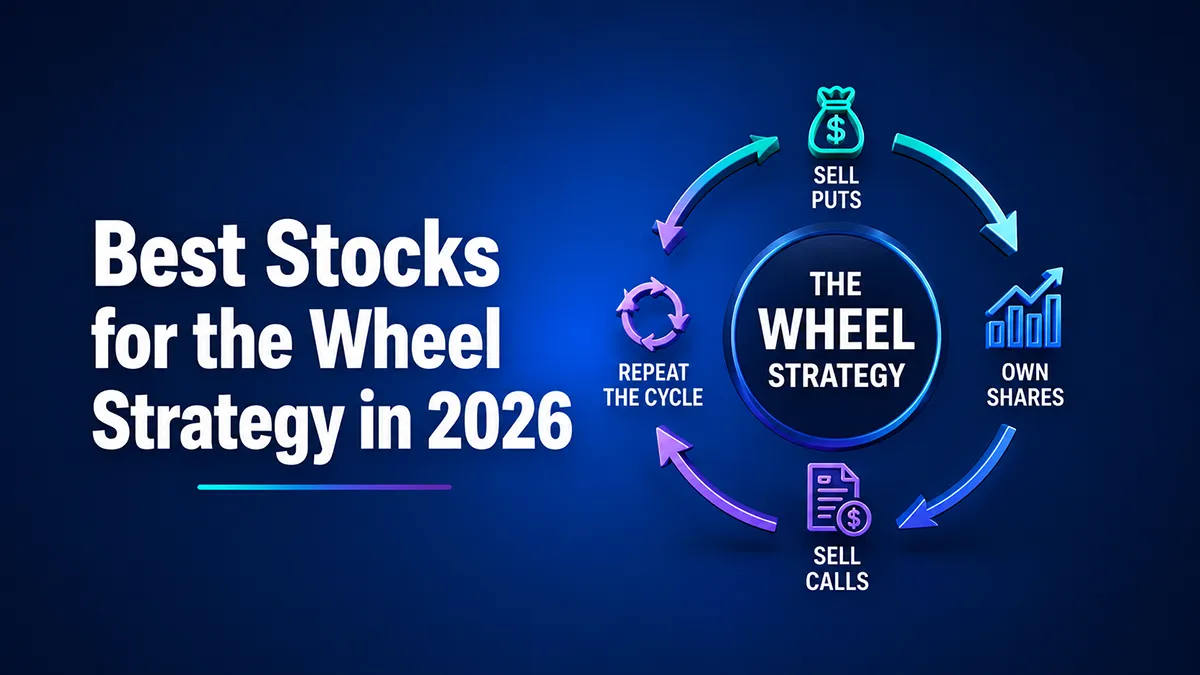
The wheel strategy is a full cycle: sell a cash-secured put, get assigned if the stock falls below your strike, then sell covered calls on the shares until they are called away — and repeat. Because you may end up holding the stock for a while, the wheel only works on names you actually want to own. A high premium on a company you would hate to be stuck with is a trap, not an opportunity.
What to Screen For
- A company you want to own. Assignment is part of the plan, not a failure. Only wheel stocks you would happily hold for months.
- Liquid options on both sides. You need tight spreads and open interest on puts and calls so every leg of the cycle rolls cleanly.
- Moderate volatility. Enough IV to pay real premium, but not so much that the stock gaps far below your put strike. Roughly 30–50% IV is a common sweet spot.
- A price you can collateralize. Cash-secured puts reserve strike × 100, so lower-priced quality names let smaller accounts run several wheels at once.
Best Wheel Strategy Stocks in 2026 at a Glance
Educational examples, not investment recommendations. IV ranges are typical, not live — always confirm current figures, the next earnings date, and liquidity first.
| Ticker | Sector | Typical IV | Best for |
|---|---|---|---|
| F | Autos | 30–45% | Small accounts, low collateral |
| AMD | Semiconductors | 40–55% | Higher premium, larger accounts |
| PLTR | Software | 40–65% | Rich premium, conviction holders |
| AAPL | Mega-cap tech | 20–35% | Lower-drama, larger accounts |
| T | Telecom | 20–35% | Lower IV, high dividend hold |
Wheel Strategy Picks for 2026
1. Ford (F) & AT&T (T)
The classic small-account wheels: low share prices mean low collateral per contract, and both pay dividends that make assignment easy to live with. Check the Ford and AT&T calculators for the covered-call leg.
2. AMD & PLTR
The higher-premium end for traders with conviction in the underlying. Both carry enough IV to make each leg of the wheel pay well, but expect deeper drawdowns — and note AMD now trades in the hundreds of dollars, so its cash-secured put leg reserves tens of thousands in collateral. See the AMD and PLTR calculators.
3. Apple (AAPL)
The lower-drama choice for larger accounts: deep liquidity, weekly options, and moderate IV make AAPL a steady wheel where assignment is rarely a problem. See the AAPL covered call calculator.
Keeping the Wheel Turning
The wheel generates a steady stream of puts, assignments, covered calls, and rolls — which is exactly where cost-basis tracking breaks down in a spreadsheet. Each assignment resets your basis, and each premium collected lowers it. Apply the same rolling principles on both the put and call side, and keep an accurate ledger so your true cost basis and realized income stay correct across the full cycle.
Find Wheel Strategy Setups Automatically
Use the free CoverEdge cash-secured put screener to find the entry leg of the wheel, and the covered call screener for the exit leg. For more put candidates see the best stocks for cash-secured puts, and for low-collateral names, the best stocks under $50 for cash-secured puts.
Frequently asked questions
What are the best stocks for the wheel strategy?
The best wheel strategy stocks are quality companies you'd genuinely be happy to own, with liquid options on both puts and calls, moderate volatility (roughly 30–50% IV), and a share price your account can collateralize. Accessible names like Ford (F), AT&T (T), AMD, Palantir (PLTR), and Apple (AAPL) are common 2026 examples — lower-priced ones suit small accounts, while AAPL suits larger, lower-drama wheels.
What makes a good wheel stock different from a good covered call stock?
A wheel stock has to work on both sides of the cycle. With a covered call you already own the shares; with the wheel you start by selling a cash-secured put and may be assigned, so you must genuinely want to own the stock at your strike. That puts more weight on business quality and your willingness to hold than on raw premium.
How much money do I need to run the wheel strategy?
Enough to collateralize at least one cash-secured put: strike price × 100. A $12 stock like Ford needs about $1,200 per contract, while a $200 stock needs $20,000. Most wheel traders start with $5,000–$10,000 and favor lower-priced quality names so they can run two or three wheels across different sectors.
What happens when I get assigned running the wheel?
Assignment is part of the plan, not a failure. When your put is assigned you buy 100 shares at the strike (your effective cost is the strike minus the premium collected), then you switch to selling covered calls against those shares until they're called away — at which point you start the cycle again with a new cash-secured put.
Track every premium dollar with CoverEdge
AI-enhanced research, assignment-aware roll analysis, and ledger-grade P&L that survives every roll, close, and assignment. Decision-support, not advice — you decide.
No credit card required · Cancel anytime