Understanding Theta Decay: How Time Works for Premium Sellers
Key takeaway
Theta decay is the gradual loss of an option's time value as it approaches expiration, and for option sellers it is the engine of profit: every day that passes, the call or put you sold gets cheaper to buy back, which is income you keep. Decay accelerates in the final 30-45 days and is fastest in the last two weeks, which is why many premium sellers open positions around 30-45 days to expiration and close or roll near 50% of max profit. Theta accrues on calendar days, so options lose value over weekends and holidays too.
Track your covered call & cash-secured put income with ledger-grade P&L in CoverEdge — free 14-day Pro trial, no card.
Start free trialTheta decay is the premium seller's best friend. Every day that passes, an option loses a little bit of time value — and that erosion goes straight into your pocket as the seller. Understanding how theta works, when it accelerates, and how to position around it is the key to maximizing covered call and put income.
Try the math on a real ticker — for free
Plug in any of 200+ tickers and get live premium, annualized yield, breakeven, and assignment P&L instantly. No signup, no credit card.
What Is Theta Decay?
Theta (θ) is one of the "Greeks" — mathematical measures of how an option's price changes. Specifically, theta measures how much value an option loses per day, all else being equal. If a call has a theta of -0.05, it loses $5 per contract per day just from the passage of time.
For option buyers, theta is the enemy — their contracts bleed value daily. For option sellers (that's you, the covered call writer), theta is income. Every day the stock sits still, you're making money.
How Theta Decay Accelerates
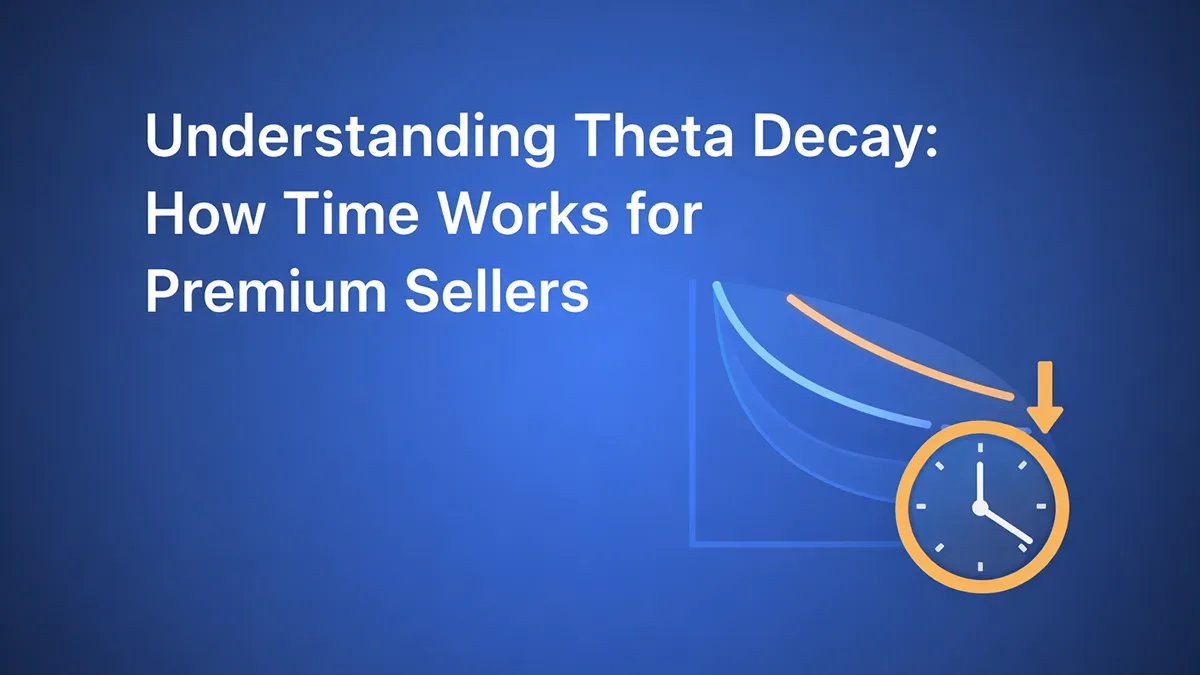
Theta decay is not linear — it accelerates as expiration approaches. This is the most important concept for premium sellers to understand:
- 60–30 DTE: Slow, steady decay. The option loses value gradually.
- 30–14 DTE: Decay picks up noticeably. This is where most sellers enter positions.
- 14–0 DTE: Rapid acceleration. The final two weeks see the most dramatic time value erosion.
This curve is why many covered call sellers target 30-day expirations — you capture the steepest part of the decay curve while still having enough time for the premium to be worthwhile. Selling at 45 DTE and closing at 21 DTE is another popular approach that captures the "sweet spot" of decay. For a fuller comparison of the trade-offs, see the guide to the best DTE for covered calls.
Theta Decay and the Theta Gang Strategy
The r/thetagang community on Reddit is built entirely around selling options to profit from theta decay. The core philosophy: you don't need to predict where a stock is going — you just need it to NOT move past your strike before expiration. Time does the rest.
Common theta gang strategies include selling covered calls, cash-secured puts, iron condors, and credit spreads. The wheel strategy is the most popular entry point — it combines puts and calls into a systematic income machine powered by theta decay.
How to Maximize Theta in Your Favor
- Sell, don't buy. Every covered call or put you sell collects theta. Every option you buy pays it.
- Target 20–45 DTE. This captures the accelerating portion of the decay curve without the gamma risk of very short-dated options.
- Sell OTM options. Out-of-the-money options are 100% time value — meaning theta erodes their entire value by expiration if the stock cooperates.
- Avoid low-IV environments. When IV is low, there's less time value to decay. Sell when IV percentile is elevated (30–70 range).
- Let winners ride. If theta is working in your favor and the option is losing value quickly, you don't always need to close early. Let time do the work.
Theta vs. Other Greeks
Theta doesn't operate in isolation. Delta (directional risk) and gamma (acceleration of delta) also affect your P&L. A stock moving sharply against you can overwhelm theta gains. That's why strike selection and position sizing matter — theta is your edge, but it's not a guarantee.
Tracking Theta Decay in Your Portfolio
As your portfolio grows, knowing your total daily theta (how much time value you're harvesting per day) becomes a key metric. CoverEdge tracks premium income, $/day efficiency, and annualized ROI for every position — giving you a clear picture of how theta is working across your entire portfolio.
Frequently asked questions
What is theta decay in options?
Theta decay is the gradual loss of an option's time value as it approaches expiration. Theta is one of the option Greeks and measures how much value an option loses per day, all else equal. For option sellers — like covered call and cash-secured put writers — theta works in your favor: every day that passes, the option you sold is worth a little less to buy back, which is profit you keep.
Does theta decay over the weekend?
Yes. Time value erodes on calendar days, not just trading days, so an option loses theta over weekends and holidays even though markets are closed. Many sellers structure trades to hold over weekends precisely to capture that decay. The price often gaps slightly lower on Monday morning to reflect the three days of decay that accrued while the market was closed.
When does theta decay accelerate?
Theta decay is not linear — it accelerates in the final 30 to 45 days before expiration and is fastest in the last two weeks. This is why many premium sellers target 30–45 days to expiration (DTE) at entry: it balances a meaningful premium against the steepest part of the decay curve, then often close or roll the position at around 50% of max profit or ~21 DTE.
How do covered call sellers profit from theta?
When you sell a covered call, you collect premium up front. As theta decay erodes the option's time value, the cost to buy it back falls, so you can either let it expire worthless (keeping the full premium) or buy it back cheaply for a partial profit and sell a new one. Theta decay is the engine behind the recurring income covered call and wheel-strategy sellers target.
Track every premium dollar with CoverEdge
AI-enhanced research, assignment-aware roll analysis, and ledger-grade P&L that survives every roll, close, and assignment. Decision-support, not advice — you decide.
No credit card required · Cancel anytime